Home » Posts tagged 'gianfranco pasquino' (Pagina 4)
Tag Archives: gianfranco pasquino
Il populismo è un modo per negare la democrazia

Palermo
L’INCONTRO IN OCCASIONE DEL FESTIVAL DELLE FILOSOFIE
Gianfranco Pasquino a Palermo:“Il populismo è un modo per negare la democrazia”
di Antonino Cicero

Tra gli appuntamenti all’interno del Festival delle Filosofie, organizzato dall’associazione Lympha, presso l’Orto botanico di Palermo, l’incontro con un ospite d’eccezione, tra i più noti politologi italiani, Gianfranco Pasquino, che ha dialogato con i docenti universitari Aldo Schiavello (Università di Palermo) e Antonio La Spina (Luiss), moderati da Sorina Soare, ricercatrice fiorentina, su “filosofia, democrazia e politica” in una sala affollata e con una buona presenza di giovani.
Molte le domande dal pubblico su temi che affondano nell’attualità e nel vivere quotidiano, tra politica, sfida tecnologica e diritti sociali. L’occasione è stata la pubblicazione del recente libro di Pasquino dal titolo “Deficit democratici” per i tipi dell’Università Bocconi.
Parole chiave “democrazia” e sua “crisi” con una sfumatura di peso: crisi “della” o “nella” democrazia? Cambia molto in una società complessa, liquida, spesso fragile. “Oggi c’è una crisi nella democrazia – sottolinea – per via dei cattivi partiti, delle cattive istituzioni e dei cattivi cittadini”.
Partendo dai fondamentali, Pasquino ricorda che “se il popolo non ha potere non c’è democrazia: punto e basta”, tanto che parte di questo potere è espresso attraverso le leggi elettorali “che se sono pessime – aggiunge Pasquino – viene meno questo potere. E la legge Rosato è pessima”, così come “un “avvocato del popolo” non può stare al governo, ma deve stare all’opposizione”. Da qui al populismo tanto in voga oggi: “È un modo per negarla”.
Le democrazie reali, quelle realizzate, sono equilibri spesso precari perché basate su più elementi, tra pesi e contrappesi “che creano fastidi a coloro cui si rivolgono” sottolinea La Spina.
Eppure “l’85% degli scandinavi – ricorda Pasquino – apprezza la propria democrazia e ritiene funzioni bene. Lo stesso vale per inglesi, tedeschi e così via. Da noi – precisa – le percentuali sono state un po’ più o un po’ meno vicine al 50%, sebbene oggi circa il 60% risulti soddisfatto del governo”.
In altre classifiche l’Italia “sta in basso, ma nel complesso – precisa ancora Pasquino – non male. È una questione di insoddisfazione” che è altro e che ha bisogno di molti distinguo. “Quelli che ce l’hanno la democrazia – ricorda il politologo e accademico dei Lincei – dicono che è morta; gli altri, la metà nel mondo, combattono per averla e per avere il modello occidentale, dalla Cina all’Africa al Sud America”.
Fissare delle definizioni condivise non è semplice, tanto che spesso si scade nel pleonastico o nel ridondante (“lo è per un partito chiamarsi democratico” ricorda Schiavello), eppure soglie minime sono imprescindibili: dal diritto di voce a quello di voto e di partecipazione diretta e indiretta alle scelte generali. “Ma chi non riesce a mangiare difficilmente si occuperà della vita politica e sarà in balia, al momento del voto, dei soliti capibastone!” sbotta cordialmente uno spettatore di San Giuseppe Jato.
Per Pasquino è così “certo, perché chi è esposto agli imperativi esistenziali o scambia il voto o è in balia di volontà altrui. È a pensarci è pure un comportamento razionale; critico chi ne approfitta“. Ma “la democrazia – aggiunge – non si fonda solo su quelle persone”.
La costituzione, a doppia mandata, non manca dal dibattito: “Della nostra – dice Pasquino – se ne parla come della più bella del mondo: così un comico; ma io dico che non c’è nessun concorso di bellezza. Che semmai – aggiunge – la costituzione più bella è quella inglese. Che non è scritta”.
La democrazia, insomma, è in preda a crisi o a rivolgimenti? Nel mucchio, all’Orto botanico, si sono messi Orban, l’Europa, Riace, la disinformazione che manipola e che è tipica dei regimi totalitari e i fondamentalismi religiosi “che non riguardano solo arabi e musulmani: pensiamo – elenca Pasquino – agli evangelici americani o ai fondamentalismi cattolici o ebrei”.
Idee in tensione, insomma, che rafforzano i legami. Anche tra persone liberamente, “democraticamente in dibattito” si scherza. Come in una sala di un festival.
“La democrazia in quanto aspirazione non è affatto in crisi” chiosa Pasquino.
Pubblicato il 14 ottobre 2018 ilSicilia.it
Tavola rotonda RAPPRESENTANZA È DEMOCRAZIA #Firenze #12ottobre #GenerazioniFest @generazionifest

FESTIVAL DELLE GENERAZIONI 2018
Un’edizione speciale, dedicata ai Grandi Temi dell’attualitàore 9.30
Palazzo Vecchio, Salone dei Cinquecento
FirenzeTavola rotonda
Rappresentanza è Democraziaintroduce
Ermenegildo BonfantiNicola Antonetti
Stefano Bartolini
Valerio Onida
Gianfranco Pasquino
di Scienza Politica
Giulio Sapelli
Nadia Urbinaticoordina
Antonio Politoriflessione sul tema
Annamaria Furlan

AUDIO Convegno “Rappresentanza, Competenza, Responsabilità” in memoria di Giovanni Sartori
24 maggio 2018
Biblioteca del Senato “Giovanni Spadolini”
Polo Bibliotecario Parlamentare
Sala degli Atti ParlamentariFerruccio De Bortoli, Domenico Fisichella, Gianfranco Pasquino, Stefano Passigli, Nadia Urbinati
L’evento è stato organizzato da Biblioteca del Senato della Repubblica “Giovanni Spadolini”.
Registrazione a cura di Radio Radicale
durata 2 ore
“Rappresentanza, Competenza, Responsabilità” in memoria di Giovanni Sartori
ASCOLTA
▼
//www.radioradicale.it/scheda/542291/iframe
Rappresentanza, competenza, responsabilità #BibliotecaSenato #24maggio Convegno In memoriam di #GiovanniSartori
24 maggio 2018 ore 15.30
Biblioteca del Senato “Giovanni Spadolini”
Polo Bibliotecario Parlamentare
Sala degli Atti Parlamentari
Rappresentanza, competenza, responsabilità
Convegno In memoriam di Giovanni Sartori
Interverranno
Ferruccio De Bortoli
Domenico Fisichella
Gianfranco Pasquino
Stefano Passigli
Nadia Urbinati
L’accesso alla sala – con abbigliamento consono e, per gli uomini, obbligo di giacca e cravatta – è consentito fino al raggiungimento della capienza massima
Si prega dare un vostro riscontro all’indirizzo indirizzo Bibleventi@senato.it

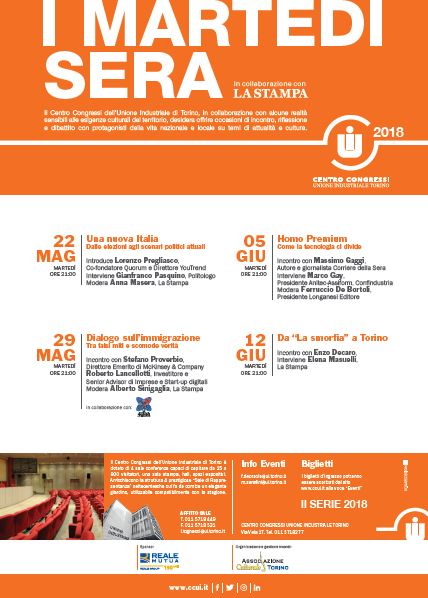
Una nuova Italia. Dalle elezioni agli scenari politici attuali #Torino #22maggio #UnaNuovaItalia #contrattodigoverno @annamasera @lorepregliasco
Nell’ambito dei “Martedì sera” del Centro Congressi Unione Industriale Torino, Anna Masera, Gianfranco Pasquino e Lorenzo Pregliasco discuteranno sulla situazione politica nata dal voto del 4 marzo e sulla nuova alleanza di governo Di Maio – Salvini.
A partire dal libro “Una nuova Italia. Dalla comunicazione ai risultati un’analisi delle elezioni del 4 marzo” (Castelvecchi), l’instant book di YouTrend con prefazione di Marco Damilano e intervista a Enrico Mentana.
Martedì 22 maggio alle ore 21
Centro Congressi Unione Industriale Torino – Via Vela 17, Torino
011 5718277I biglietti d’ingresso potranno essere scaricati gratuitamente dal sito http://www.centrocongressiunioneindustriale.it/elencoBiglietti

After Italy’s vote: The case for a deal between the Democratic Party and the Five Star Movement

Italy’s election produced a fragmented result and there has been intense speculation over the potential government that could emerge from negotiations. Andrea Lorenzo Capussela and Gianfranco Pasquino argue that in a tri-polar parliament dominated by populists of different descriptions, a cabinet centred on some form of understanding between the Democratic Party and the Five Star Movement would be the least bad option from the perspective of both Italy’s and Europe’s interests. At the very least, the logic of parliamentary democracy requires the two parties to engage in serious talks.

Palazzo Montecitorio, seat of the Italian Chamber of Deputies, Credit: David Macchi (CC BY-NC-ND 2.0)
The Italian election produced three surprises. The centre-right coalition came first, as predicted, but within it voters largely preferred the anti-establishment rhetoric of Lega – the radical-right party formerly known as the Northern League, which recently shed its original secessionism to embrace sovereignism – to the more ambiguous liberal-populism of Silvio Berlusconi’s party, Forza Italia. They punished the ruling Democratic Party (PD) more harshly than expected, and rewarded the anti-establishment Five Star Movement (M5S) more generously than expected.
Like the PD, Berlusconi’s party scored the worst result of its history. Except in 2011-13, when both supported a non-partisan executive, those two parties or their predecessors – the alliance that merged into the PD in 2007 – have either led the government or the opposition ever since 1994. Although much divided them and their policies, they jointly presided over the country’s singular and remarkable decline, which began then. Suffice it to say that during the 2000s average per-capita real growth was the lowest in the world, and average real disposable income is now at about the same level as it was in 1995: in Italy’s closest Eurozone peers – France, Germany, and Spain – it is about 25% higher. Their joint defeat suggests that an opportunity might have opened for the country to gradually shift toward a fairer and more efficient equilibrium.
Before turning to the implications for the formation of the next government, however, a brief look at the composition and policy orientation of the three poles that dominate parliament, shown in the table below, might be useful. For two of these poles are fairly loose coalitions, and the solidity of the third cannot be taken for granted, especially when one considers that during the 2013-18 parliament, 36.7 per cent of MPs switched sides, often more than once (347 out of 945 elected MPs officially switched sides, and 566 switches were recorded).
Table: Selected results from the 2018 Italian election

Note: The seats shown in the table are preliminary figures. Two seats are as yet unassigned in either chamber; in the Senate, the count covers elected seats only. † In a slightly different composition between the two elections. ‡ With a different name and composition between the two elections. Source: Official data
Besides Lega and Berlusconi’s party, the centre-right coalition comprises a post-fascist grouping (‘Brothers of Italy’ in the table) and a smaller cartel of patronage networks. It is held together by history (they governed together in 1994, 2001-6, and 2008-11), by an equally long tradition of tolerance for illegality and clientelism and impatience for pluralism and constitutional democracy, by varying degrees of opposition to immigration, nationalism, and Euroscepticism, which only Berlusconi’s party muted during the campaign, and by a fairly extreme flat-tax proposal (the suggested rates are 15 or 23 per cent). But Lega’s virulent anti-establishment rhetoric, which undoubtedly contributed to the quadrupling of its votes, distances it markedly from its partners.
The Five Star Movement deliberately ran alone. But its lack of either a recognisable political culture or a reliable method for selecting candidates, its weak internal democracy, and its short history suggest that exits are possible (it lost 32.7 per cent of its parliamentarians in 2013-18). Although it too seems impatient with pluralism, its anti-political views do not extend to a rejection of constitutional democracy and the checks and balances system. On the contrary, its overall stance is couched primarily in terms of transparency and public integrity, and its support for judicial and political accountability survived the first large scandals in which the party was implicated. To this foundational message the M5S recently added the proposal of a form of universal basic income, it softened its Euroscepticism, and seems to have shelved its opposition to the common currency.
The centre-left coalition is far less balanced than its ideological alternative. None of the PD’s three allies reached the 3 per cent threshold, and within them only two figures carry some influence: Emma Bonino, who led a grouping of pro-European libertarians, and the former leader of a centrist party that was allied to Berlusconi until the 2010s. The coalition ran on the record of the 2013-18 PD-led cabinets, promising greater efforts on unemployment, poverty, and equality of opportunity. It advocated further European integration, ever a pillar of the PD’s stance, but gave this issue modest prominence. More importantly, several choices of candidates, especially in the South, appeared to indicate that the weight of clientelism has grown within that party.
Arithmetic and policy compatibility suggest that the next government could be built upon three alternative majorities, whether formal (coalition cabinets) or informal (parliamentary support for minority executives): the M5S and the PD, with or without the latter’s allies or, in their stead, a small leftist grouping (‘Free and Equal’ in the table); centre-right and centre-left; and M5S and Lega. A non-partisan government supported by most parties is a fourth option, which would probably be pursued if those three fail, as an alternative to snap elections. But such a cabinet would presumably have the mandate merely of steering the country while parliament designs a better electoral law: one, for instance, which allowed citizens to select their representatives.
The background against which these alternatives must be set is well known. Domestically, the growth acceleration of 2017 is likely to slow down, and the exceptionally favourable external macroeconomic environment of the past few years will gradually revert to normality. In Europe, the renewed Franco-German alliance does seem set to give impetus to EU and Eurozone reform, but faces both risks and obstacles – such as, for example, an unhelpful US administration, a hostile Russia, and dangerous relations between the two. It will also have to address the (legitimate) demands and reservations of an informal grouping of mainly Northern and North-Eastern smaller member states. Italy must choose a strategy and can indeed influence the outcome of this debate, which could shape the future of the continent for a decade or more.
Let us assume, for simplicity, that the centre-right’s interests are on the whole less aligned to the needs of Italy’s material and democratic development than those of the other parties, as recent history arguably suggests, and that greater European integration is desirable, at least if greater doses of democracy and accountability will infuse the common institutions. On these assumptions, admittedly subjective, it can readily be shown that only the first alternative (a deal between the M5S and the PD) could potentially advance both Italy’s and Europe’s needs.
With inverted roles, a left-right coalition would resemble the 2013-18 ones, which included either Berlusconi’s party or, de facto, segments of it. They achieved little on either front. A right-led coalition would likely do worse. Meanwhile, Lega’s flat tax (15 per cent) and the Five Star Movement’s universal basic income proposals are mutually incompatible. An alliance between them could thus lead the populists within the M5S to follow Lega’s example in the search for scapegoats: immigrants, Brussels, the euro, and others. Italy and probably also the EU are highly unlikely to survive unscathed.
Conversely, the M5S and the PD could find common ground on a genuinely universalistic, sustainable, and pro-growth reform of social insurance, on the fight against corruption and tax evasion, and, possibly, also on public administration reform and a pro-growth public expenditure review. Over five years, a meaningful degree of implementation of almost any plausible programme built along these lines would make Italy a distinctly better country.
The pre-conditions for such a compact are that the M5S pledges support for greater European integration, upon a sufficiently clear platform, and that the PD distances itself from collusion with the economic elites, clientelism, and the other unethical practices that increasingly permeated it. Cooperation could improve both sides of the deal, in other words. The main risks are friction, deadlock, and break-up. They are serious, of course, but could be reduced by following the German example: a detailed and transparent coalition agreement, made after comprehensive negotiations and public intra-party discussion and deliberation. The PD and even more the M5S have a lot to learn for such a demanding process to work, but nothing prevents them from giving it a try.
Having narrowly won the 2013 election, the PD offered a roughly similar alliance to the M5S but was mockingly rebuffed. Stung by defeat and by that precedent, the PD has so far, perhaps tactically, rejected the Five Star Movement’s informal overtures. The reasons offered boil down to these: cooperation with the M5S is not what voters want and would damage the party. It could harm the existing party, arguably, but might make it a better one. Above all, both Italy’s and Europe’s interests and the very logic of parliamentary democracy require the two sides to engage in serious talks. Talks held according to established practice (the largest party should lay down the platform), with reasonable safeguards (an adequate mixture of transparency, on strategic choices, and confidentiality, on tactical ones), and an open horizon (leading to either a formal coalition or external support for a minority government, and potentially encompassing also other parties or figures).
Note: This article gives the views of the authors, not the position of EUROPP – European Politics and Policy or the London School of Economics.
March 22nd, 2018
***
About the authors
 Andrea Lorenzo Capussela led the economic and fiscal affairs office of Kosovo’s supervisor, the International Civilian Office, and is the author of State-Building in Kosovo: Democracy, Corruption, and the EU in the Balkans (I.B. Tauris, 2015), and of The Political Economy of Italy’s Decline (Oxford University Press, 2018). He tweets @AndreaCapussela
Gianfranco Pasquino – University of Bologna
Gianfranco Pasquino is Emeritus Professor of political science at the University of Bologna and member of the Accademia dei Lincei. He has published a number of books on Italian politics and is co-editor of the Oxford Handbook of Italian Politics. He tweets @GP_ArieteRosso
INVITO Presentazione RESPUBBLICA 7febbraio #Bologna #laFeltrinelli
Giampiero Marrazzo presenta RESPUBBLICA (Castelvecchi). Interviene Gianfranco Pasquino. Cos’ha rappresentato veramente la Prima Repubblica? Perché si è voluto cancellarla con tanta fretta? Cosa fu veramente la Prima Repubblica, ormai ricordata quasi soltanto per il suo epilogo, Tangentopoli? La generazione politica che ne fu protagonista ebbe dei meriti? La Costituzione, le riforme sociali, le lotte ideologiche, i governi di solidarietà sono alcuni dei temi trattati nelle interviste realizzate dal giornalista Giampiero Marrazzo agli esponenti dei principali partiti dell’epoca: Pomicino, Intini, Macaluso, Occhetto, Signorile e De Mita.
mercoledì 7 febbraio 2018 ore 18
la Feltrinelli
Piazza di Porta Ravegnana 1, Bologna
Presentazione del libro
RESPUBBLICA
di Giampiero Marrazzo
insieme all’autore intervengono
Paola Bonora, LeU
Nunzia De Girolamo, Forza Italia
Gianfranco Pasquino, Professore Emerito di Scienza Politica – Università di Bologna
modera Francesco Ghidetti, giornalista QN
INVITO Pietro Ingrao, Memoria 6febbraio #Archiginnasio #Bologna
Maria Luisa Boccia e Gianfranco Pasquino presentano, insieme al curatore Alberto Olivetti, il libro di Pietro Ingrao, Memoria (Ediesse).
Coordina Katia Zanotti.
6 Febbraio 2018 ore 17.30
Biblioteca dell’Archiginnasio Sala dello Stabat MaterUn manoscritto inedito in cui Pietro Ingrao analizza le vicende e traccia il bilancio di cinque decenni di storia del nostro Paese. Il libro fa parte della collana “Carte Pietro Ingrao”. Attingendo al ricco Archivio Pietro Ingrao, custodito a Roma presso il Centro studi e iniziative per la Riforma dello Stato, la collana accoglie scritti di Ingrao e dei suoi interlocutori e corrispondenti. Una serie di volumi dedicati a significativi aspetti del confronto politico e del dibattito culturale italiano con una spiccata rilevanza storica e un interesse di particolare attualità.

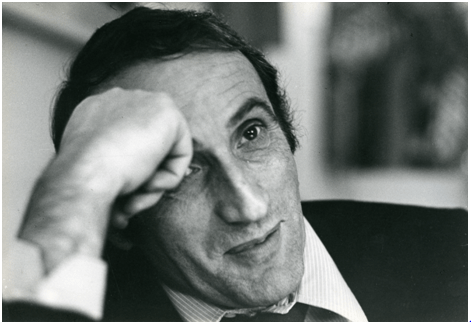
INVITO “Eleganza operaia e stile comunista” Ricordo di Eliseo Milani 11gennaio #Roma
Su iniziativa dell’Associazione ex Parlamentari della Repubblica
Ricordando Eliseo Milani, più volte parlamentare, tra i fondatori
de “Il manifesto”, in occasione dell’uscita del libro a lui dedicato
“Eleganza operaia e stile comunista”
Editore Lubrina Bramani
giovedì 11 gennaio ore 17
Sala dell’Istituto Santa Maria in Aquiro
Piazza Capranica, 72
Roma
interverranno:
Luciana Castellina
Gianfranco Pasquino
Pietro Barrera
Famiano Crucianelli
Mauro Olivi
Aldo Garzia
Le opinioni e i contenuti espressi nell’ambito dell’iniziativa sono nell’esclusiva responsabilità dei proponenti e dei relatori e non sono riconducibili in alcun modo al Senato della Repubblica o ad organi del Senato medesimo.
L’accesso alla sala – con abbigliamento consono e, per gli uomini, obbligo di giacca e cravatta – è consentito fino al raggiungimento della capienza massima.
A cosa serve l’Europa? @BOOKCITYMILANO 19novembre #BCM17


19 novembre 2017 ore 12
ISPI – Palazzo Clerici
Sala della Corte
Via Clerici 5, MilanoA cosa serve l’Europa?
Gianfranco Pasquino e Valerio OnidaA cosa serve l’Europa?
E’ un’occasione per fare il punto sull’Europa che abbiamo costruito fin qua, nel momento in cui più forti soffiano i venti contrari del populismo e del nazionalismo più ottuso. Un modo per capire cosa rischiamo di perdere e cosa potremmo invece riconquistare, recuperando i valori di libertà, di pace, di prosperità da cui, nelle ore più buie del secolo scorso, è nata l’idea di Europa unita.
L’Europa in trenta lezioni (UTET 2017)

Gianfranco Pasquino, L’Europa in trenta lezioni, UTET 2017
 gianfrancopasquino